 Amparo Rous asked 1 month ago
A .Z05 file is typically one volume in a segmented backup or distribution set rather than a standalone compressed file. If you have any concerns relating to where by and how to use Z05 file extraction, you can contact us at the web-site. In typical ZIP workflows, .Z05 appears as one of the middle .z0N chunks in a chain of segments that together contain all the compressed data, coordinated by the main .zip file. In other environments, .Z05 is documented as part of a multi-volume RAR set, meaning it participates as one numbered volume in a longer compressed chain. Trying to treat a lone .Z05 as a normal single-file ZIP or RAR usually fails because the archive’s table of contents and other pieces live in its companion segments. Tools like FileViewPro effectively turn a confusing array of .z0N pieces into a single, straightforward extraction process, so you can focus on the recovered files rather than on how the archive was split.
In modern computing, compressed files act as efficient storage bundles that minimize file size without changing what the files actually contain. At their core, they work by looking for repeating patterns and unnecessary duplication so the same information can be written in a shorter form. This allows users to pack more into the same disk space or send large sets of files faster over the internet. One compressed archive might hold just one file, but it can just as easily wrap entire project folders, media libraries, or application setups, combined into a single compact unit that is noticeably smaller than the source material. This flexibility explains why compressed files show up in so many places, including installers, system backups, shared folders, and large media collections.
The history of compressed files is closely tied to the evolution of data compression algorithms and the growth of personal computers. During the 1970s–1980s, pioneers like Abraham Lempel and Jacob Ziv developed famous schemes like LZ77 and LZ78, demonstrating that redundancy could be removed without permanently losing information. These ideas eventually led to widely used methods like LZW and DEFLATE, which power many popular compression formats today. In the late 1980s and early 1990s, developers like Phil Katz helped bring file compression to everyday users with tools such as PKZIP, effectively standardizing ZIP archives as a convenient way to package and compress data. Since then, many alternative archive types have appeared, each offering its own balance of speed, compression strength, and security features, yet all of them still revolve around the same core principle of compact packaging.
Under the hood, archives use compression schemes that are typically categorized as either lossless or lossy. Lossless approaches keep every single bit of the original, which is critical when you are dealing with applications, spreadsheets, code, or records. Common archive types like ZIP and 7z are built around lossless algorithms so that unpacking the archive gives you an exact duplicate of the source files. Lossy compression, by contrast, deliberately discards information that is considered less important, especially in media like audio, video, and certain images. Even when the formats look different on the surface, all compression is still about capturing structure and similarity so files occupy fewer bytes. In most archive formats, compression is tightly integrated with packaging, so you can both reduce size and preserve a complete directory layout inside a single file.
Improved hardware and connectivity did not make compression obsolete; instead, they turned archives into essential building blocks in more complex workflows. Today, many programs reach end users as compressed archives that are extracted during installation. Game developers bundle textures, sounds, levels, and configuration files into compressed assets to reduce load times and save storage space while keeping updates manageable. For administrators and DevOps teams, compression is tightly woven into tasks like archiving server logs, packaging build artifacts, and moving configuration bundles between machines. In the cloud, compression plays a quiet but crucial role in keeping large-scale storage and data transfer efficient enough to be affordable and responsive.
Compressed files are equally valuable when you are preserving information for the long haul or protecting it from prying eyes. With compression, large historical datasets and personal collections that would otherwise be unwieldy become easy to back up and move. To guard against bit rot or transfer errors, compressed archives often embed mechanisms to confirm that everything inside is still valid. In addition, many archive tools allow users to encrypt their compressed files, turning them into compact, password-protected containers. The result is that a single compressed file can act as both a vault and a space-saver for important content.
For everyday computer users, compressed files also simplify workflows and collaboration. Instead of sending dozens of separate attachments, you can place them in a folder, compress it, and share a single smaller archive that is faster to upload and download. When collaborating, this also ensures that the original folder structure and filenames remain intact, so nothing is lost or reordered accidentally. Backup tools frequently use compressed archives so they can capture snapshots of entire folders or systems efficiently. As a result, knowing how to deal with compressed files is now as fundamental as understanding how to copy and paste or move files between folders.
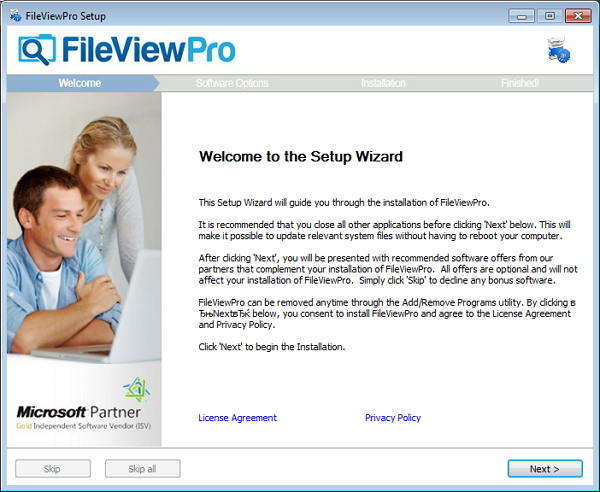 With numerous formats in the wild, it is common for users to run into archives they have never seen before and are not sure how to open. Instead of guessing which program to use, you can rely on FileViewPro to identify and open the archive for you. With one consistent workflow for many different formats, FileViewPro reduces the risk of errors and saves time when handling compressed archives. Whether you are a casual user, a power user, or somewhere in between, tools like FileViewPro take the complexity out of dealing with compressed files so you can focus on the content rather than the format.
Looking ahead, compressed files will continue to adapt as storage devices, networks, and user expectations evolve. Researchers and developers are constantly working on algorithms that deliver stronger compression with lower processing overhead, which is crucial for streaming, gaming, and large-scale cloud workloads. Despite all the innovation, the core goal has not changed; it is still about making big things smaller and more manageable. In every scenario, from home PCs to enterprise servers, compressed files make data easier to move, store, and protect. In practice, this means you can enjoy the speed and efficiency of compressed files while letting FileViewPro handle the details in the background.
With numerous formats in the wild, it is common for users to run into archives they have never seen before and are not sure how to open. Instead of guessing which program to use, you can rely on FileViewPro to identify and open the archive for you. With one consistent workflow for many different formats, FileViewPro reduces the risk of errors and saves time when handling compressed archives. Whether you are a casual user, a power user, or somewhere in between, tools like FileViewPro take the complexity out of dealing with compressed files so you can focus on the content rather than the format.
Looking ahead, compressed files will continue to adapt as storage devices, networks, and user expectations evolve. Researchers and developers are constantly working on algorithms that deliver stronger compression with lower processing overhead, which is crucial for streaming, gaming, and large-scale cloud workloads. Despite all the innovation, the core goal has not changed; it is still about making big things smaller and more manageable. In every scenario, from home PCs to enterprise servers, compressed files make data easier to move, store, and protect. In practice, this means you can enjoy the speed and efficiency of compressed files while letting FileViewPro handle the details in the background.
With numerous formats in the wild, it is common for users to run into archives they have never seen before and are not sure how to open. Instead of guessing which program to use, you can rely on FileViewPro to identify and open the archive for you. With one consistent workflow for many different formats, FileViewPro reduces the risk of errors and saves time when handling compressed archives. Whether you are a casual user, a power user, or somewhere in between, tools like FileViewPro take the complexity out of dealing with compressed files so you can focus on the content rather than the format.
Looking ahead, compressed files will continue to adapt as storage devices, networks, and user expectations evolve. Researchers and developers are constantly working on algorithms that deliver stronger compression with lower processing overhead, which is crucial for streaming, gaming, and large-scale cloud workloads. Despite all the innovation, the core goal has not changed; it is still about making big things smaller and more manageable. In every scenario, from home PCs to enterprise servers, compressed files make data easier to move, store, and protect. In practice, this means you can enjoy the speed and efficiency of compressed files while letting FileViewPro handle the details in the background.